Why Houston Teams Need Improv More Than Another Meeting
Q4 is coming, the heat index is ridiculous, and everyone is already double-booked. You do not need another long offsite with too many slides and not enough change. You need your people to actually talk to each other differently, especially when things get tense.
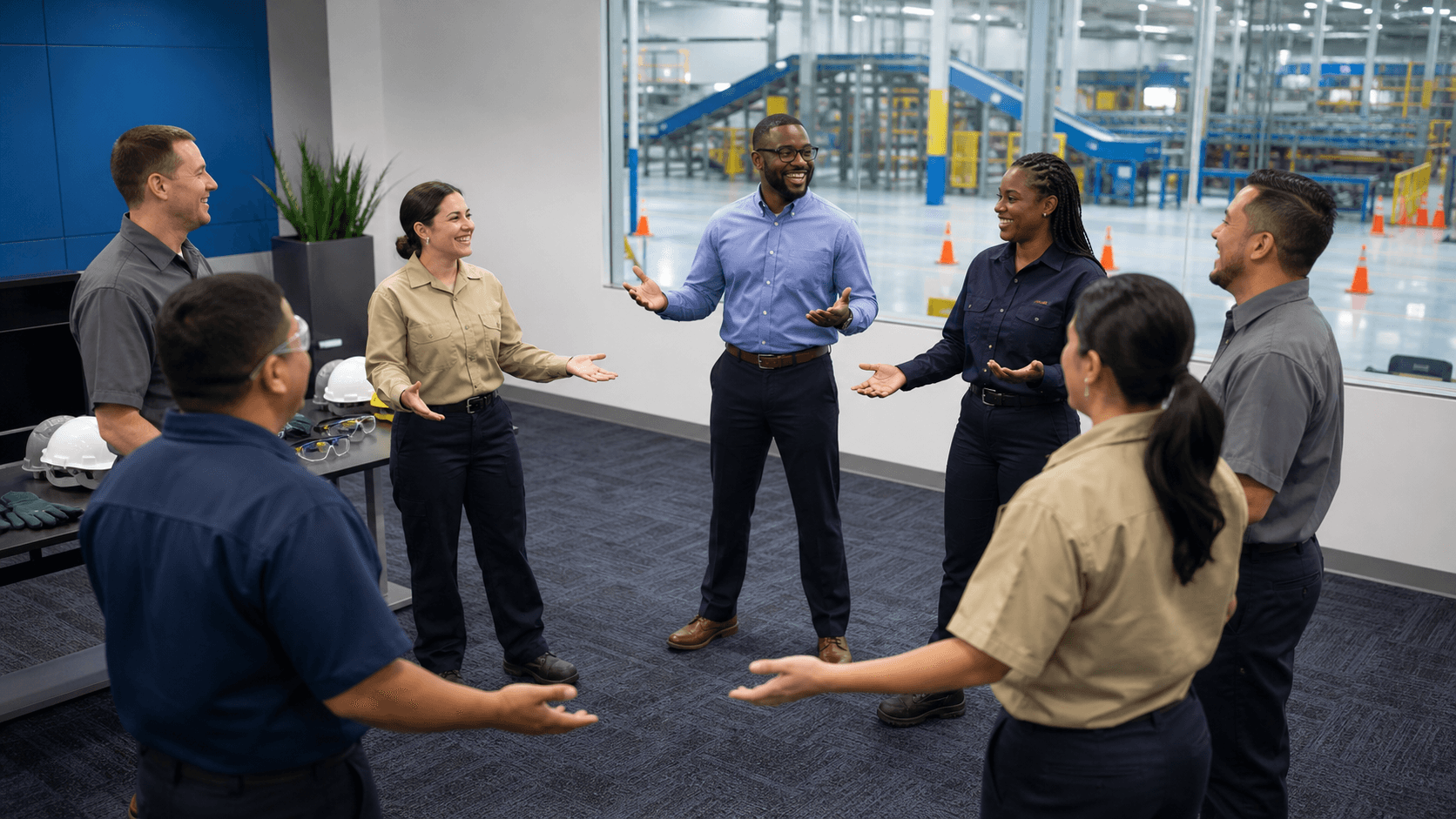
That is where a corporate improv workshop in Houston comes in. Not as a comedy show, but as a lab for communication, safety, and leadership. For energy and healthcare teams, that means practicing how to handle high-stakes conversations, fast-changing information, and cross-functional coordination without fake cheerleading or trust falls.
In full honesty, when we say "improv," we are not talking about turning your team into a cast from Whose Line Is It Anyway? We are talking about something much more practical.
We look at improv as a set of behaviors, not a personality type. Listening deeply, saying "yes, and," taking shared risks, and recovering quickly when things shift. In this article, we will look at use cases for Houston energy and healthcare teams, how we respect safety and compliance, and how to design improv that works for shift-based crews, including nights. By the end, you will have a clear sense of where improv fits (and where it does not) in your world.
What Improv Actually Teaches Your Team
Corporate improv is not about turning your staff into stand-up comics. It is about training a few core habits you already want from them.
Three big ones:
- "Yes, and" means: accept what is already true, then add something useful
- "Make your partner look good" means: take responsibility for the whole exchange, not just your own point
- "Status shifts" means: practice moving between leading and following without ego
In a real workplace, these skills show up when someone needs to say, "Something feels off here," in front of a senior leader. Or when a tech has information that could change a call but is worried about getting shut down. Improv gives people language and muscle memory so they speak up faster and clearer.
You might be wondering, "Isn't this just theater games?" Fair question. The difference is that instead of talking about communication, people actually do it, in real time, while their bodies are a little keyed up. That "embodied" practice sticks better than another slide deck on feedback skills. Think of it less like a TED Talk and more like a flight simulator for conversations.
The takeaway here: improv drills the exact behaviors you are already asking for in safety briefings, leadership trainings, and culture decks, but it does it in a way people can feel, not just understand intellectually.
Inside a Houston Corporate Improv Workshop
A typical session has a clear arc. We do not start with high-wire scenes or public speaking drills.
We start gentle:
- Low-pressure warmups to get people breathing, laughing, and present
- Short exercises that teach one skill at a time, like listening or clear handoffs
- Then customized scenarios that mirror your actual work
For Houston energy or healthcare teams, that might mean:
- Handoffs between shifts or departments
- Incident response calls where information comes in chunks
- Cross-site updates where time is tight and stakes are high
Psychological safety is built into the design. People always have a clear opt-in level. No one is forced to perform solo. We frame each exercise, run it, then debrief it, pulling out what worked, what felt hard, and how it maps to their daily work.
I should also note: logistics matter here as much as content. We understand big campuses, remote staff, and August heat. Workshops can be set up indoors in energy-conscious spaces and can include hybrid or virtual follow-ups for remote crew members who cannot be in the room.
Energy and Healthcare Use Cases, Safety, and Shifts
In the energy sector, improv lines up naturally with operations. So much of the work already depends on quick, clear communication in uncertain conditions.
Think about:
- Pre-job briefs and tailboards
- Control room communication with field crews
- Vendor and contractor coordination with incomplete information
- Field-to-HQ updates under time pressure
We run exercises where someone plays a field tech, another a supervisor, another a safety officer. They get partial information, must ask clarifying questions, repeat back what they heard, and make a shared decision. "Yes, and" looks like, "Yes, that's what the procedure says, and here is a new piece of data we need to include." Over time, this kind of practice makes it less scary to pause a job, talk through a near miss, or admit uncertainty.
Healthcare has its own intense communication patterns. You live in handoffs, hallway consults, and family conversations that start calm and get emotional fast.
We focus on things like:
- Interdisciplinary rounds and quick consults
- Bedside handoffs and shift changes
- Patient and family updates in stressful moments
- Back-of-house coordination between nurses, techs, physicians, and admin
One common module is a "chaotic shift change." New admit, deteriorating patient, worried family, EMR alerts. People practice staying grounded, prioritizing out loud, and using clear structures like SBAR while still actually listening. The tone is light enough that people can laugh together, but the content is respectful of how hard the work really is. That shared laughter often cracks open a bit of relief and connection, which matters for burnout and morale.
All of this sits inside a safety and compliance frame. We are very clear: improv does not replace protocols, checklists, or regulatory training. It supports them by working on the human behaviors you need for those systems to actually function.
That is why we start any engagement by talking with your EHS, legal, or compliance folks when needed. We get aligned on:
- Vocabulary you use on site or on the unit
- Red lines we do not cross
- Tools we should include, like actual radios, checklists, or SOPs
We call it "scripted spontaneity." People improvise, but inside your real constraints. We avoid re-enacting actual incidents, and we stay away from anything that could feel like replaying trauma. Instead, we build parallel situations that let teams practice escalation, de-escalation, and problem-solving safely.
Shift-based work shapes the format as much as the content. You cannot pull everyone off nights for half a day and still run a plant or a hospital.
So we design around your schedule:
- Short 60 to 90 minute micro-workshops inside existing safety meetings or huddles
- Half-day deep dives for core leaders or high-impact groups
- Train-the-trainer options for internal champions who can keep the work going
Night and early morning crews get lower cognitive load exercises that wake people up without draining them. Mid-shift groups might get more complex scenario work. We also pay attention to fairness so nights and weekends do not get the "leftover" version. That can mean repeating sessions at different times, doing asynchronous follow-ups, or building a series of shorter touchpoints so everyone has access.
The practical outcome: you get a common language and set of habits across shifts and roles, without asking anyone to sacrifice safety or coverage.
Making It Yours and Selling It Internally
The best workshops are built from your reality, not a template we drop on top of you. We like to start with listening. Sometimes that looks like light shadowing of meetings, walking the floor, or quick chats with people from different roles. We ask about where communication breaks down, but also where it already works well.
From there, we co-design the agenda with your leaders. We can weave in:
- Your existing safety mantras
- Just Culture or High Reliability Organization principles
- Lean or continuous improvement practices you already use
Because we are local to the Houston area, we also pay attention to things like site geography, heat and humidity, and the global mix of accents and backgrounds on your teams. Exercises are chosen and framed so they land across different cultures and comfort levels.
If you like data (and most leaders who approve budgets do), you can track impact in simple ways. Some teams watch for changes in near-miss reporting, quality of incident writeups, or cross-team feedback after the workshop series. Others look for quieter signs, like more people speaking up in meetings or smoother handoffs across shifts.
Of course, you may need to sell this idea internally. The phrase "corporate improv workshop in Houston" might raise eyebrows. It can help to reframe it for leaders as:
- A live communication and safety skills lab
- A collaboration simulator for high-risk, high-change work
- A practical add-on to existing safety weeks or leadership programs
Start small with a pilot at one site, unit, or leadership group. Gather feedback, capture concrete behavior shifts, and use that data to make the case for a wider rollout.
At The Radical Agreement Project, we see improv as a way for people to practice trusting each other when things are messy, not scripted. For Houston's energy and healthcare teams, that trust is not a nice-to-have. It is what you want in place when the heat, the clock, and the stakes all spike at once.
Bring Improv-Powered Collaboration To Your Houston Team
If you are ready to help your team communicate more clearly, listen actively, and think on their feet, we are here to help. At The Radical Agreement Project, we design each corporate improv workshop in Houston around your specific goals and team dynamics. Tell us what challenges you want to tackle and we will recommend a workshop format that fits your schedule and culture. Have questions about pricing, customization, or logistics? Just contact us and we will walk you through the next steps.