Make Team Building in Seattle Worth the Time
You have a finite budget, a full roadmap, and a team already stretched across meetings, sprints, and Slack channels. So when you pull everyone out for team building activities in Seattle, it hurts if all you get is a nice day on the water and zero change on Monday.
You know the pattern. People have fun, take a few selfies, maybe bond over snacks. Then the very next standup, you are back to side chats, siloed projects, and cameras off in meetings. If you are going to pull people away from real work, it should actually change how they work together.
What you are really buying is not "a fun afternoon." You are buying the chance to shift habits. Not just laughs on the Duck Boat or pictures at Gas Works, but changes that show up in standups, retros, and hard 1:1s. In full honesty, that only happens if you design the experience that way from the start.
Our focus here is how to design those experiences so your team is still using what they learned long after the snacks are gone.
You have probably done the classics:
- Trust falls and icebreakers that feel a little forced
- Escape rooms where one loud person solves everything
- Scavenger hunts through downtown that end in a bar and a vague "that was fun"
Two weeks later, the same patterns are back.
The problem is not that these things are "bad." It is that they are built as entertainment first, practice space second. They give you a shared memory, but not shared muscle.
Sticky team building flips that order. It treats the event as a lab where people try new ways of talking, listening, and disagreeing on purpose.
That is where improv comes in. Not as a comedy show, but as a set of tools that turn a sunny afternoon in South Lake Union into real skills your team can still reach for when the rain and Q4 deadlines hit.
(Quick honesty note: we love a good kayak as much as anyone. We just do not want the kayak to be the only thing people remember.)
Why Most Team Building Activities Fade Fast
If you zoom out on the team building you have seen, here in Seattle or anywhere else, a big reason it fades is that it is built as an experience, not an experiment.
You go kayaking on Lake Union, throw axes in Belltown, or climb a rock wall in SoDo. Maybe someone makes the obligatory "this is like a trust fall" joke. It is a pleasant break.
Then it is over.
In a pure "experience," people mostly:
- Follow the host's lead
- React instead of noticing their own habits
- Leave with a story, not a shift
An experiment feels different. People are explicitly invited to say, "Today I am going to practice speaking up earlier," or "I am going to listen without jumping in." The activity becomes a safe place to test that.
I should also note a second trap: fun without reflection.
The event ends, everyone checks their phones, and within minutes they are back in Outlook or Slack. No one says, "What did we just learn about how we communicate?" So nothing crosses the bridge from the rooftop or park back into the office or Zoom room.
Then there is the one-size-fits-nobody workshop. You sit through generic content on "effective communication," but your real friction is:
- Confusing handoffs between product and engineering
- Feedback that always sounds harsher over Slack
- Zoom fatigue across time zones and different teams
If activities do not map to those actual pain points, they cannot stick.
This is where applied improv is powerful. By "applied improv," we mean: taking the core skills improvisers use on stage, listening, saying "Yes, And," co-creating under uncertainty, and adapting them directly to workplace contexts. We can tune the games to match real team tensions instead of staying at a vague "yay, collaboration" level.
The Improv Shift From Spectators to Co-Creators
Quick reset on improv.
We are not talking about "Whose Line Is It Anyway?" style performances where a few brave souls jump on stage and everyone else watches from the dark like it is a Netflix special. Applied improv pulls core improv skills into a training space: listening, saying "Yes, And," and making each other look good.
In our world, improv is not about being funny. It is about:
- Noticing the offer in what someone just said
- Building on it instead of blocking it
- Staying in the mess long enough to find something new together
Participation beats performance. Nobody wins a prize for clever lines.
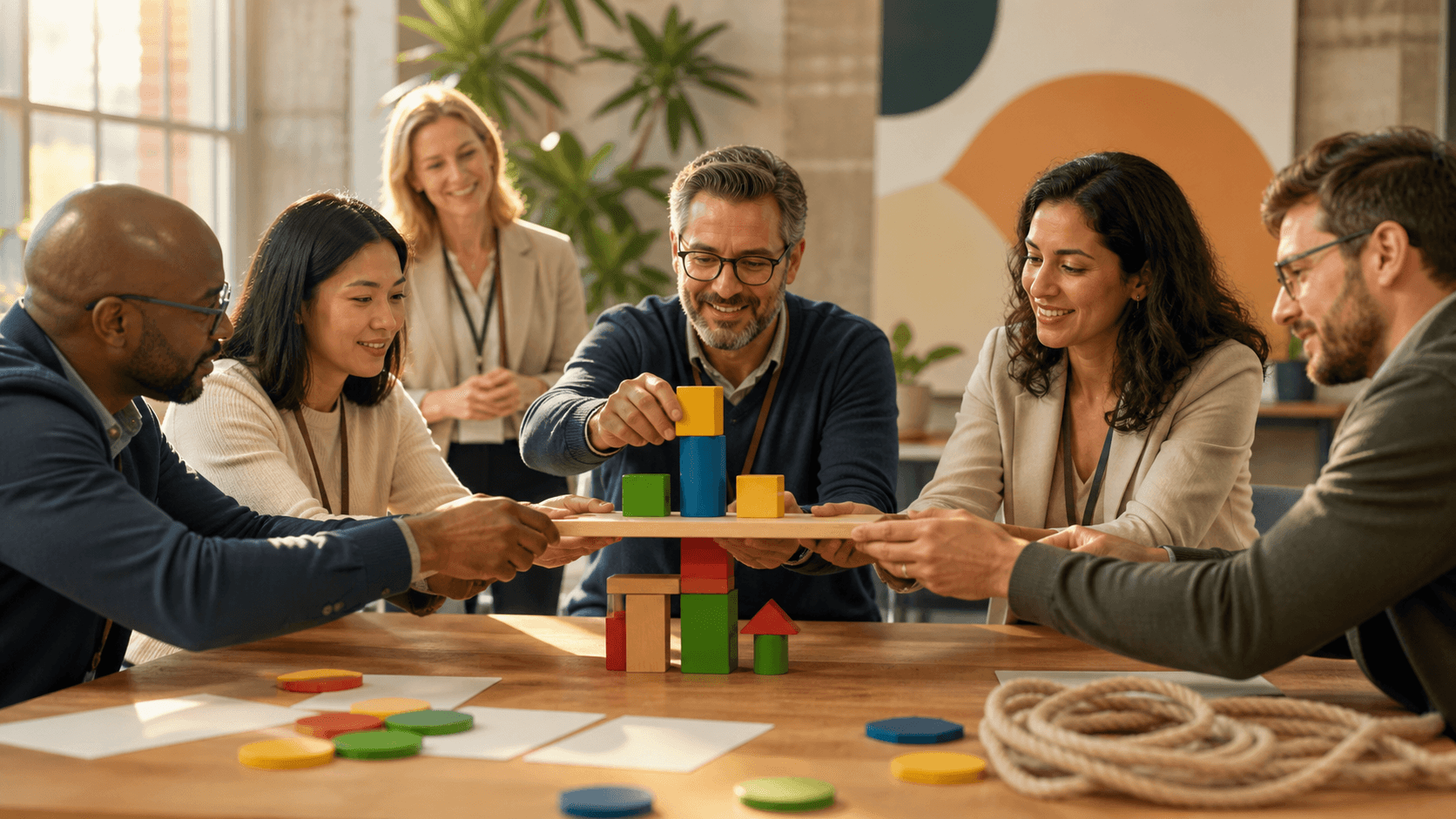
We design exercises so introverts, new hires, and senior leaders can all play at the same level, without posturing or worrying about being the "funny one." If your CFO and your newest engineer can both take the same risk in the same moment, that is where culture starts to shift.
Here is a simple example we use often with Seattle teams.
We run a "Yes, And" chain. One person starts a wild idea: "Let's build our office on a floating platform on Lake Union." Each person must respond with "Yes, and..." and add to the idea, no matter how strange it gets. You end up with something completely ridiculous, think a floating office, espresso bar courtesy of a roving coffee cart, weekly visits from the Fremont Troll, and everyone is laughing.
But the real point is what that maps to.
In a product meeting at a company like, say, a mid-stage SaaS startup in Pioneer Square, someone shares a half-baked idea. The default move is often "Yes, but here's why that will not work." The improv move is "Yes, and here is a piece of that we can test."
That shift from critique first to support first can rewrite how brainstorms feel, and people remember it because they lived the contrast in a low-stakes game.
Making Team Building Activities in Seattle Actually Stick
To make team building activities in Seattle stick, you want to "design with Monday in mind." Before choosing a venue or snack, ask: What do we want people to do differently on Monday?
Things like:
- Fewer passive-aggressive messages
- Clearer questions in standups
- More honest feedback in 1:1s
Once you know that, each exercise can target a behavior.
Then comes the key step most events skip: practice, then name it.
Right after a game, you pause and ask short, specific questions like, "What just happened in that exercise?" "Where does that show up in our sprints?" "What would 'Yes, And' look like with our stakeholders?"
That quick debrief locks the learning in. People get language for what they just did, so they can spot it later.
In full honesty, this is one of the biggest differences we see between "fun outing" and "culture shift." The debrief is where the dots connect.
Local context matters too.
Seattle teams juggle:
- Hybrid setups between downtown, the Eastside, and beyond
- Long dark winters where energy dips
- Short, bright summers when attention is scattered
A July workshop is the perfect place to prototype behaviors your team will need when the skies are gray and projects are intense. If people practice staying curious under pressure in a relaxed summer session, they have muscle memory ready when the calendar and the clouds both get heavy.
Building a Seattle-Specific Playbook Your Team Will Remember
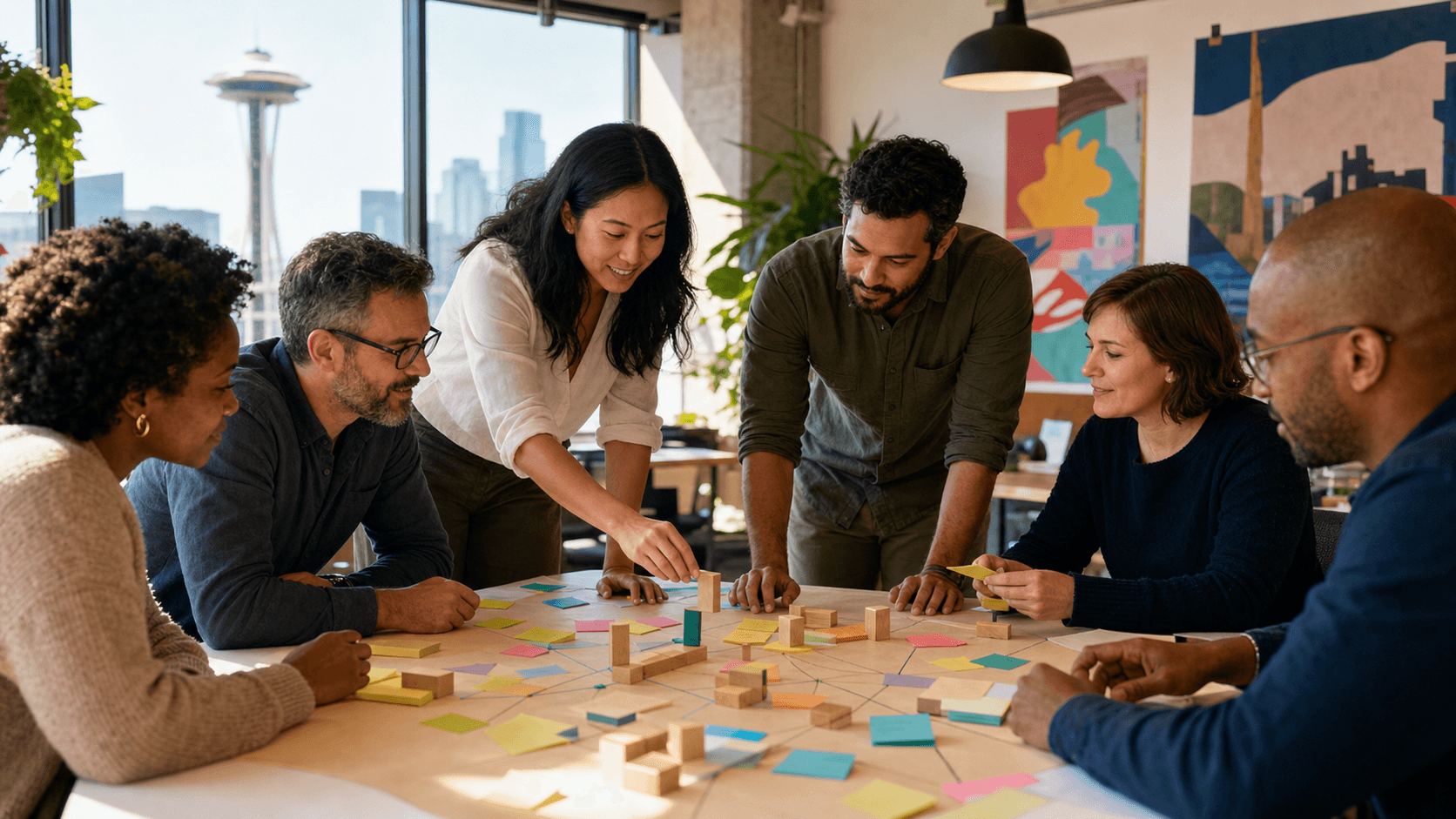
One of our favorite tricks is using the city as a lab.
When you anchor exercises in real Seattle moments, people remember them. This can look like:
- Listening drills during a short walk through Pioneer Square
- Quick improv scenes about ferry delays or light rail hiccups
- A group story about shipping a big release the same week half the team is away at a music festival
It feels silly in the moment, but those details become hooks the brain holds onto. The next time someone's ferry is late, they remember, "Oh right, this is that moment where we practiced staying flexible instead of spiraling."
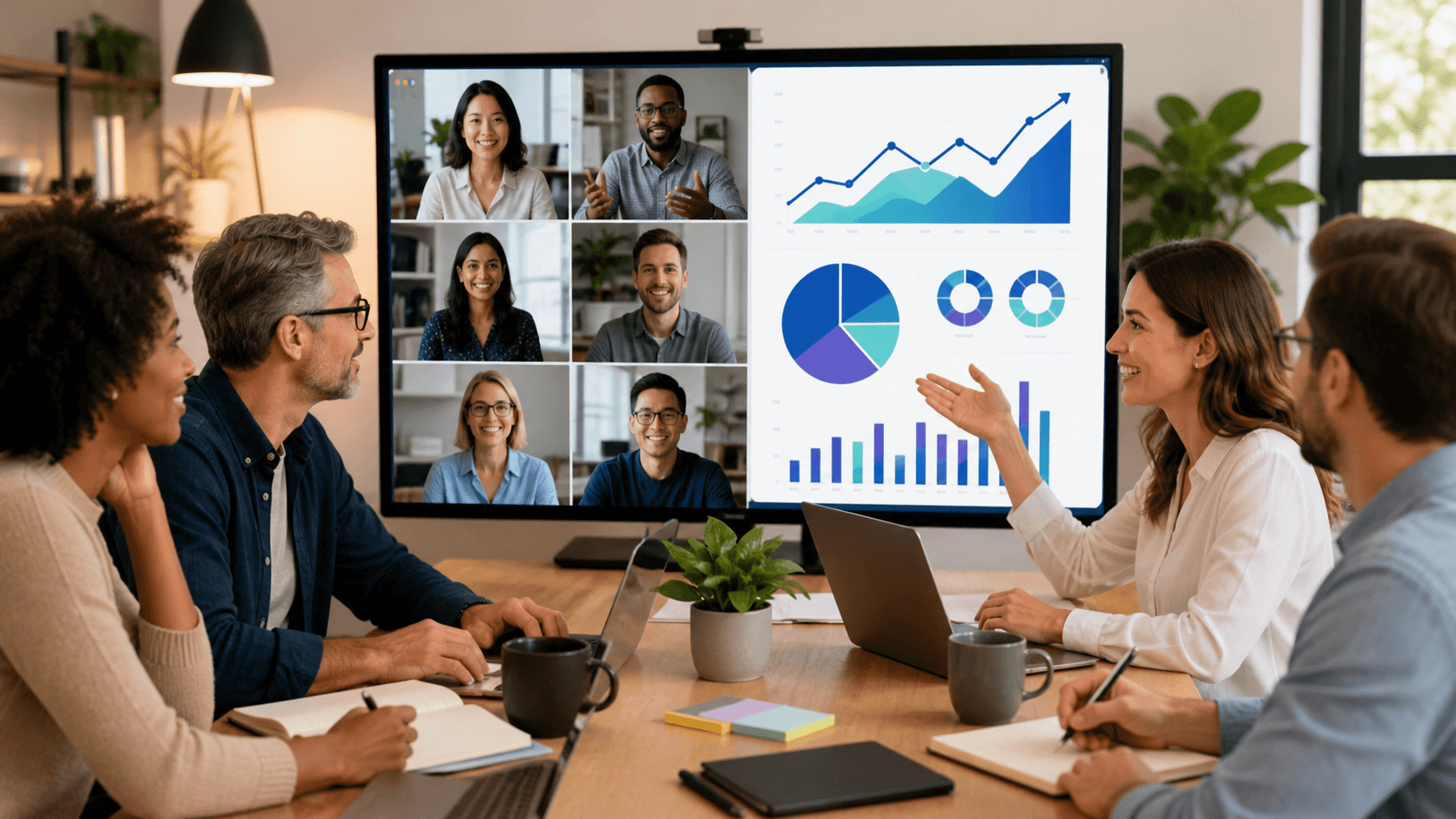
Hybrid teams are the norm now, so you also have to design for the people who are not in the room.
Improv adapts well to:
- Chat-based games for folks with cameras off
- Rapid "Yes, And" rounds in breakout rooms
- Listening exercises where remote people lead the reflection
The goal is that remote teammates are co-creators, not just an audience watching the in-person group bond. If your Bellevue folks are in the office and your Ballard folks are at home in hoodies, they should still feel like they are in the same experiment.
The last piece is turning moments into language.
During a workshop, the group will naturally create inside jokes. We listen for the ones that actually point to a pattern. Maybe an exercise about unclear requests turns into everyone laughing about "the Great Coffee Order Fiasco."
Later, a manager can say, "Feels like we are in Coffee Fiasco mode," and everyone knows it is a cue to slow down, clarify, and get curious, not blame.
That is how a single event starts to shape culture.
From One Fun Day to an Ongoing Practice
For team building to last, it has to shrink down into tiny, repeatable moves.
After a summer event, that might look like five-minute warm-ups at the start of a planning meeting, a monthly "Yes, And" check-in where people share one moment they tried the skill, or pairing "improv buddies" who help each other spot chances to apply what they practiced.
Leaders play a big role here.
When managers use the same language from the workshop and name their own habits, it signals that this is not just a field trip. When a director says, "I think I just blocked that idea, let me try a Yes, And instead," it gives everyone else permission to experiment too.
In our experience, that kind of visible shift from leaders is often what convinces the skeptics, the engineers who would rather refactor code than play a game, and the PMs eyeing their backlog, to give the new behaviors a real try.
Team building activities in Seattle do not have to be a rotating cast of fun but forgettable outings.
With an applied improv lens, you can turn that sunny day together into a practice your team carries into tough conversations, complex projects, and all those gray mornings when communication matters most.
And if you design with Monday in mind, experiment over experience, reflection over novelty, and you will not just have a good day in Seattle. You will have a team that actually works better together long after the snacks are gone.
Strengthen Your Seattle Team With Intentional Collaboration
If you are ready to turn one-off events into lasting culture shifts, explore our tailored team building activities in Seattle designed to deepen trust and communication. At The Radical Agreement Project, we work with you to shape experiences that fit your team's goals, not just fill a calendar slot. Share a bit about your group and objectives and we will recommend a focused approach that makes your next session truly count. To start planning, contact us today.