Why Seattle Is Saying Yes to Corporate Improv
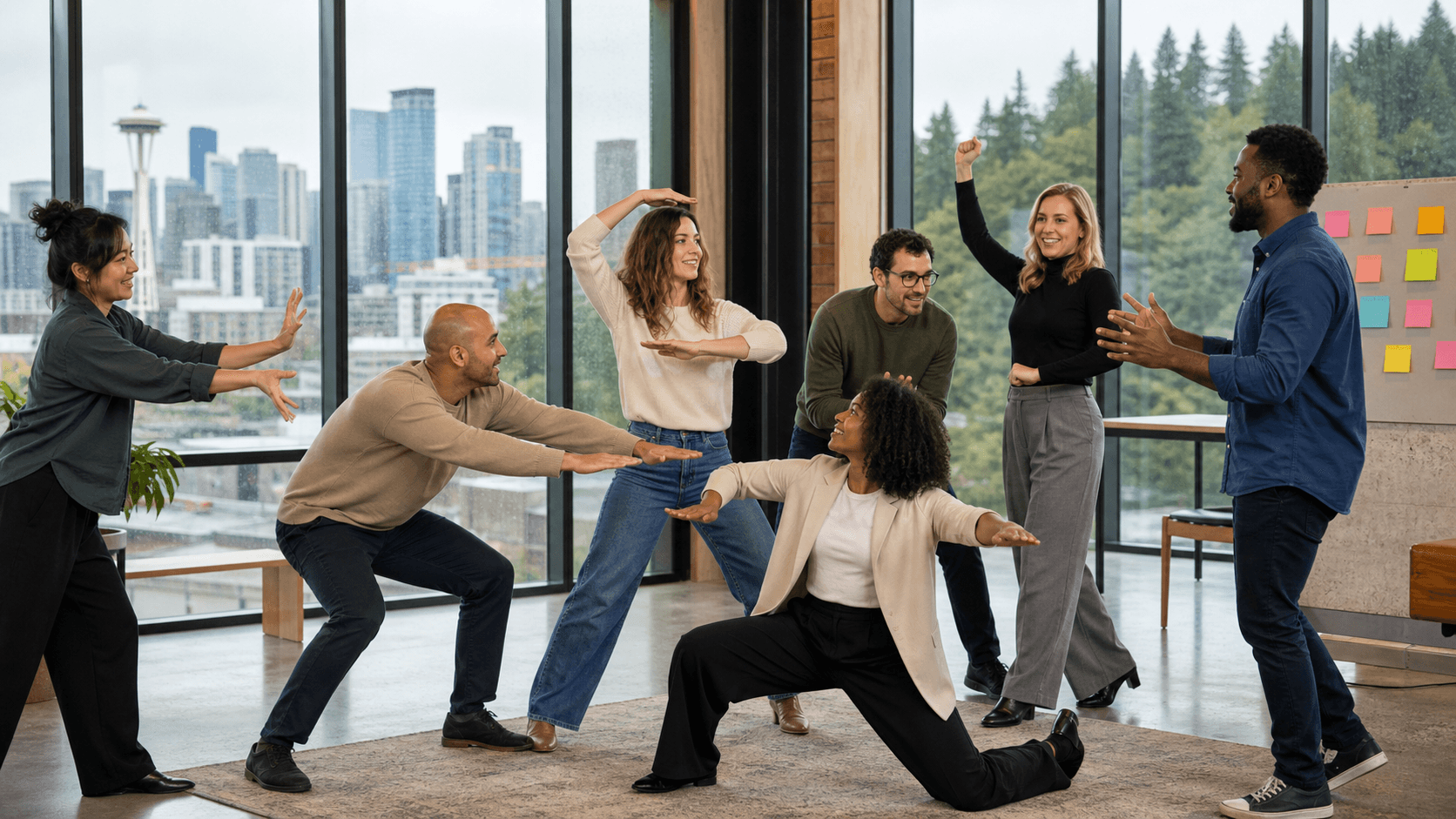
A corporate improv workshop in Seattle sounds a little odd at first. You might picture performers onstage, not your team in a conference room. But improv is quietly becoming one of the most useful tools for teams that are tired, stretched, and still trying to work well together.
Late summer here feels very specific. The sun finally shows up, everyone scatters on strange PTO schedules, and then suddenly the calendar flips and Q4 is staring at you. Leaders start to feel that mix of pressure and worry: engagement is slipping, hybrid meetings feel flat, and people are polite but not really present.
In a city with endless team activities, why are more groups picking improv instead of another escape room or axe throwing afternoon? It is because a good workshop is not about turning your coworkers into comedians. It is about using improv tools like Yes, And, active listening, and status work to practice how you actually want to show up with each other.
Seattle is already built on experimentation. Tech, startups, creative shops, nonprofits, and global companies all live in a culture that loves trying, shipping, learning, and trying again. Improv fits right into that mindset. And when it is taught well, it feels very different from the generic improv-lite trainings that get pulled from a dusty binder and dropped on teams anywhere.
What Seattle Teams Secretly Want From Training
Most people in Seattle have sat through a certain kind of training. Slides. Buzzwords. Maybe a breakout discussion that never goes anywhere. People are kind, they nod along, and they leave exactly the same.
A lot of local teams tend to share a few traits:
- Highly thoughtful and well read
- Strong belief in collaboration, at least on paper
- Comfort with process, less comfort with messy human feelings
- A habit of holding back ideas to avoid conflict or slowing things down
You can probably feel it in meetings. Someone has a real thought but swallows it. People give soft agreement, then have the actual conversation in a side chat. This is normal, but it also makes work slower and less honest.
A well-designed corporate improv workshop in Seattle goes straight at those hidden needs. It gives people a space to:
- Practice speaking up without sounding harsh
- Disagree while still sounding supportive
- Take small interpersonal risks and see they are safe
And we should say this clearly: improv does not mean you must be funny on command. It means responding in real time, building on what others give you, and making clear choices without a script. The same skills you need in a live client call, a surprise roadmap change, or a hard one-on-one.
We see groups walk in pretty skeptical. They stay because the games feel strangely relevant. By the end, they are using simple shared phrases for honest pushback that does not feel like a fight. That is the shift.
How Seattle's Comedy Ecosystem Shapes Better Workshops
Seattle has a long, quirky comedy history. You can find improv in classic theaters, black box spaces, and small back rooms over bars. That means there is a deep bench of people who have stood onstage, tried something, failed in front of a crowd, and stayed anyway.
That lived experience matters in business rooms. Trainers who come from actual performance learn to:
- Read a room quickly and adjust in real time
- Notice energy shifts and unspoken hesitation
- Turn creative risk into clear, repeatable tools
This is different from a soft-skills session that just adds one improv game for fun. Here, the starting point is performance discipline: listening for offers, playing with status, and staying honest in the moment. Then that discipline gets translated to product teams, marketing groups, HR, or engineering.
One simple exercise we like is a Yes, And scene built around a real upcoming launch or internal change. People pair up and build the plan like this:
- One person states the current reality
- The partner says Yes to that reality, out loud
- Then adds one clear, constructive And
No one is allowed to start with "but we tried that already." You practice accepting where the roadmap is right now, then adding adjustments that still respect the frame. It trains people to move from automatic blocking to thoughtful building.
At The Radical Agreement Project, our teachers both perform and work with companies. So we naturally speak both languages: the stage and the stand-up, but also sprints, stakeholder maps, and cross-functional conflict.
Inside a Seattle Corporate Improv Room
Since improv can sound scary, it helps to know what actually happens in the room. A typical session might look like this:
First, there is a quick warm-up. Nothing wild, just light movement, eye contact, and group games that get people laughing without putting anyone on the spot. The goal is to shake off email-brain.
Next, we do a listening and noticing game. People repeat what they heard from a partner, then heighten it a bit. They discover how often they half listen, or jump in early, or assume they know where someone is going.
Then we build a scene or structured exercise around a common tension for that group. For example:
- Hybrid friction between remote and in person teammates
- Constant roadmap changes from leadership
- Confusing messages that travel through too many layers
Strong workshops in this city are never one size fits all. They flex to your industry, your team size, and whatever is actually hurting right now. A hospital team has different needs than a game studio. The bones of improv are the same, but the surface looks different.
We also talk about fear directly. No one is forced to stand alone in front of the group. You always play with a partner or small group. The aim is not to catch people messing up, it is to make it normal to try, miss, laugh, and try again.
After each game, we pause to connect it to real work. Questions like:
- What changed when you felt truly listened to?
- When did you notice yourself pulling back?
- How does that feel like your last planning meeting?
Teams leave with a few tiny moves to test, such as starting one round of Yes, And before critiquing ideas, or having one person mirror what they heard before the group moves on.
Why Improv Resonates with Seattle's Work Culture
Improv gets sticky here because it lines up with how Seattle already thinks about work. A few quick links:
- Yes, And feels like agile, you accept the current state then iterate forward
- Status work maps to how leaders and individual contributors share power in meetings
- Making your partner look good matches cross team alignment and blame free postmortems
This city also holds a mix of idealism and pressure. Many teams care deeply about mission, climate, health, social good, while also living inside dashboards, deadlines, and high expectations. Improv helps people have the hard conversations about tradeoffs without losing their sense of being on the same side.
We should be clear: a workshop cannot fix a broken org chart or magically soften a toxic leader. What it can do is give regular people more options in the moments they do control. How they react to surprise. How they say no. How they show support when someone takes a risk in a meeting.
Late August is a perfect time to treat a corporate improv workshop in Seattle as an offsite without needing travel. The team is drifting back from summer. Before the fall rush and performance reviews hit, you can reset how you talk to each other and what kind of room you want your meetings to be.
Bringing Improv Into Your Next Quarter
So the question is simple: what do you actually want the next quarter to feel like for your team? More honest feedback? Less dead air on calls? A little more courage in the room so ideas do not die in silence?
Improv is a low-risk way to test that. You can:
- Pick one moment where connection really matters, like a planning day or retreat
- Use those answers to shape a focused brief for an improv-based session
You do not have to love comedy or theater to benefit from improv. You only need a group of people who are willing to show up, say Yes, And to trying something different for a couple of hours, and see what shifts in how they talk and work together.
At The Radical Agreement Project, that is the work we care about, building real human skills through play so your team can move into the busy fall season feeling clearer, braver, and more aligned.
Turn Your Next Team Meeting Into a Breakthrough Moment
If you are ready to replace awkward icebreakers with real collaboration, our team would love to help. Explore our corporate improv workshop in Seattle to see how The Radical Agreement Project can support communication, creativity, and trust on your team. Share a few details about your group and goals through our contact page, and we will follow up with a tailored workshop plan. Let's make your next gathering the moment your team starts working together in a new way.